4.1 Understanding the RTPS Message Header
The overall structure of an RTPS Message consists of a fixed-size RTPS Header followed by a variable number of RTPS Submessage parts. Each Submessage consists of a SubmessageHeader and a variable number of SubmessageElements. The RTPS header must appear at the beginning of every message.
The Header contains these fields:
- protocol: Identifies the message as an RTPS message.
Representation: 4 bytes
0.........8........16........24........32
+-+-+-+-+-+-+-+-+-+-+-+-+-+-+-+-+-+-+-+-+
|   'R'   |   'T'   |   'P'   |   'S'   |
+---------+---------+---------+---------+
Representation: 2 bytes. This release uses version {2, 1}.
Representation: 2 bytes. The RTI vendor identifier is {1, 1}.
Representation: 12 bytes: 4 bytes for the host identifier, 4 bytes for the application identifier and 4 bytes for the instance identifier.
Figure 4.1: RTPS Message Structure
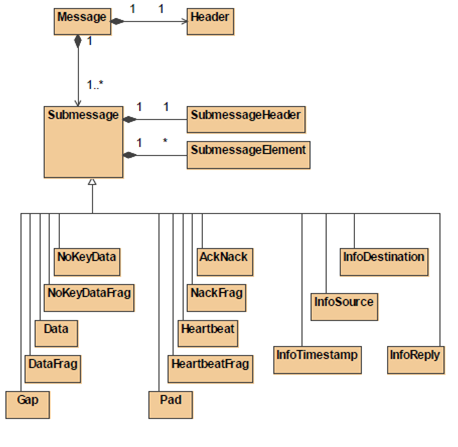
Figure 4.2: RTPS Message Header Structure
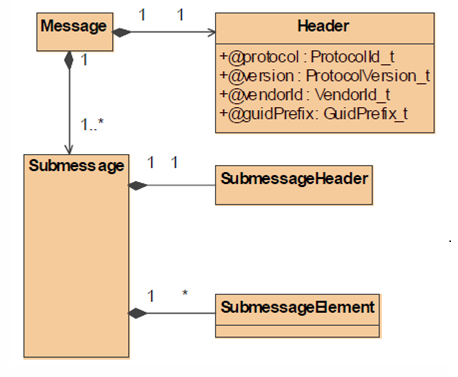
The LBRTPS transport reduces the RTPS message headers by eliminating the protocol, version, and vendorId fields in the RTPS Header structure.